
What exactly does "hardware" refer to? In fact, there are more than five types of hardware, and the majority of people are unaware of this.
Release date:2025-12-05 Clicks: 342In life, there are often many terms related to "hardware". However, not many people actually know exactly what each type of hardware refers to. Hardware products are usually divided into two main categories: large hardware and small hardware.
In daily life, when it comes to purchasing various small accessories and tools, the place where one goes most frequently is the hardware store. You may notice that in new residential areas, the first store to open up seems to be a hardware store.
The small hardware store has an incredibly wide range of items for sale. Besides various screws and nails, it also offers pliers, wrenches, mops, water pipes, electrical wires, and even some stores sell cement, sand and bricks.
So, what exactly do we usually mean by "hardware"?
The origin of the term "hardware"
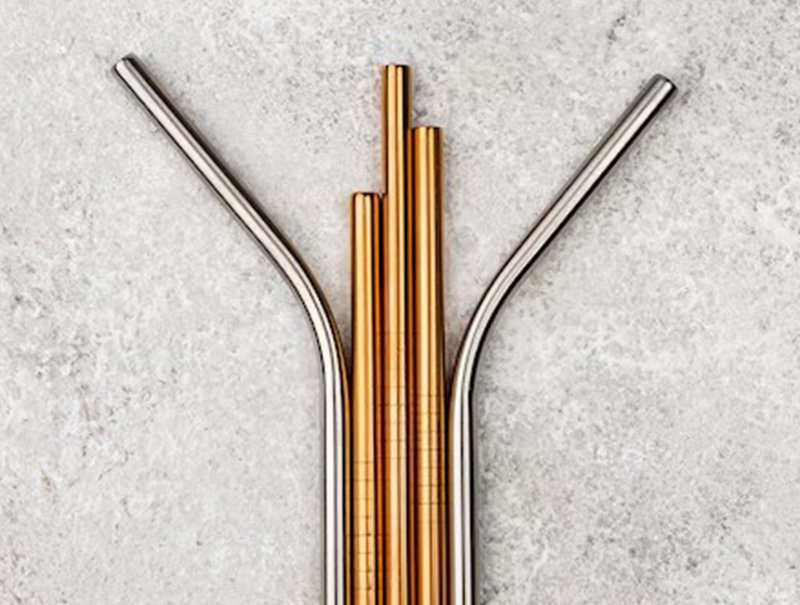
According to historical research, the term "wuxin" first appeared in the Eastern Han Dynasty. In the book "Wuyue Chunqiu", which records events from the Spring and Autumn and Warring States periods, the word "wuxin" was used - "Wuyue Chunqiu" Volume 4 "Huan Wu Neizhuan": "I have heard that King Yuan of Yue often ordered Ou Yuezhi to forge five swords... One of them was called Zhanlu, which was the pinnacle of the five metals, the essence of the sun." According to the "Han Shu · Shiguo Zhi": "Gold refers to the five-colored gold. Yellow is called gold, white is called silver, red is called copper, blue is called lead, and black is called iron." “
According to the "Modern Chinese Dictionary", it provides a further explanation: The so-called "five metals" refer to gold, silver, copper, iron and tin.
The further application of metals has played a significant role in the development of human civilization and social history. Metal products can be found in every corner of economic life, political life, and military activities.
In modern times, with an increasing variety of metals, and with the further application of metals, metal products have appeared in every corner of life, such as hardware tools, hardware components, daily hardware, construction hardware, and security products, etc. Therefore, people have collectively referred to all products made of metals as hardware.
The eight main characteristics of metals
The term "metal" has a very broad meaning, encompassing many different properties. For example, lead (a dense heavy metal), mercury (a liquid metal), and sodium (a soft metal that can be cut with a knife) - what are the main characteristics of metals?
1. Strength: The ability of a material to resist deformation and fracture under the action of external forces (loads). The load applied per unit area of the material is called stress.
2. Yield Point (бs): Also known as yield strength, it refers to the stress that a material experiences during the stretching process. When the stress reaches a certain critical value, the load no longer increases but the deformation continues to increase or reaches 0.2%L, and the stress value is expressed in Newtons per square millimeter (N/mm2).
3. Tensile strength (бb): Also known as the ultimate strength, it refers to the maximum stress value that the material can withstand before breaking. The unit is expressed in Newtons per square millimeter (N/mm2).
4. Elongation (%): The percentage of the total elongation of the material after it undergoes tensile fracture compared to the original gauge length.
5. Reduction of area (Ψ): The percentage of the maximum reduction in cross-sectional area after the material undergoes tensile fracture compared to its original cross-sectional area.
6. Hardness: This refers to the ability of a material to resist the pressure exerted by a harder object on its surface. Common hardness measurements are based on their ranges, such as Brinell Hardness (HBS, HBW) and Rockwell Hardness (HKA, HKB, HRC).
7. Impact toughness (Ak): The ability of a material to resist impact loads, measured in joules per square centimeter (J/cm²).
8. Luster:
Metals are also renowned for their unique appearance. Under light, metals exhibit a shiny surface. Metals such as gold, silver and platinum possess a dazzling luster, which gives them greater value in jewelry and decoration.
The luster of metals is obtained through the interaction of light and electrons. In metals, electrons can move freely. When light shines on the surface, electrons absorb the light and gain energy. As the movement of electrons speeds up, more reflected light is produced, and the shiny metal can then be seen by the human eye.
In fact, there are not just five types of hardware. The variety of hardware is extensive, with different specifications and sizes. It plays an irreplaceable role in various fields. Our country is also a major manufacturing country of hardware. Many places across the country are hailed as the world's hardware capitals, and they produce all kinds of hardware products for the world every day.
1. Lock Class
Exterior door locks, anti-theft locks, bathroom locks, padlocks, number locks, lock bodies, lock cores, and so on.
2. Hand-holding Devices
Drawer handles, cabinet door handles, glass door handles.
3. Hardware for doors and windows
Hinges: Glass hinges, corner hinges, bearing hinges (copper and steel), pipe wrench hinges; Wait a moment.
4. Household Decorative Hardware Category
Universal wheels, cabinet legs, door nosings, air ducts, stainless steel trash cans, metal hanging supports, plugs, and so on.
5. Plumbing and Hardware Category
Aluminum-plastic pipes, three-way fittings, threaded elbows, leak-proof valves, ball valves, eight-way valves, straight-through valves, ordinary floor drains.
6. Tools Category
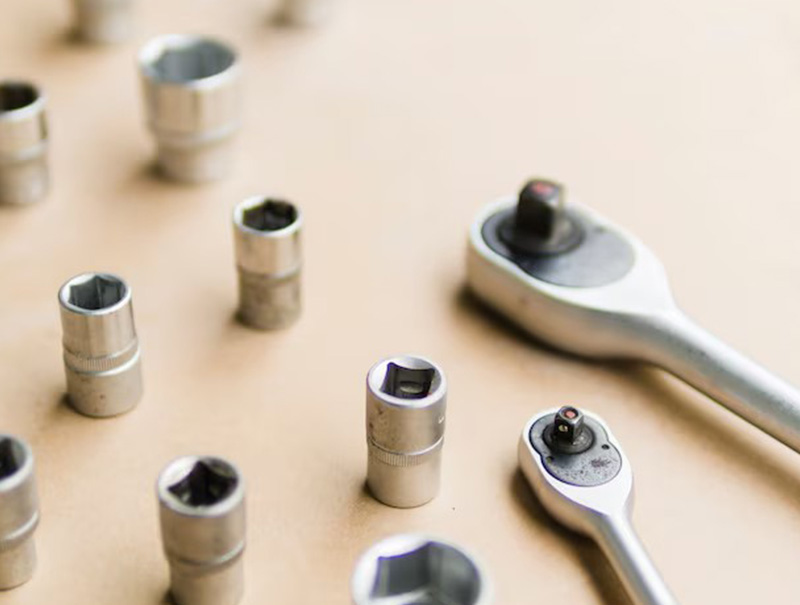
Steel saw, hand saw blade, pliers, screwdriver, tape measure, wire cutters, needle-nose pliers, flat-nose pliers, angle-nose pliers, glass glue gun, drill bit > straight shank twist drill bit, diamond drill bit, electric hammer drill bit, hole opener.


 Return